
Sunday, 16 March 2014

Monday, 17 February 2014
Dollars cannot buy eyesight for the blind king

The son grew up in the jungle, knowing that he was a prince, although he had never seen his father. The wife and the son continued to love the king, as they always do in such stories. They never felt bad for being kicked out of the kingdom on an astrologer’s prediction.
The queen named her son Taj ul-Mulk, the crown of the state, although he had no state. Since he lived in a forest, Taj was a great hunter-gatherer and always brought home plenty of food.
Once, while chasing a deer, he met an old and over-dressed man who was wearing a strange headgear. He did not yet know that this was called a crown, which gave his father the power to banish him and his mother.
The old man too was surprised to see a half-naked young man in the jungle as Taj had only covered his waist with the skin of a deer he had hunted last spring.
The king wanted to know who this young man was but he was too thirsty to ask for anything but water. And while he was drinking the water Taj gave, he looked closely at the young man’s face and something very strange began to happen.
Taj’s face blurred. The eyes were first to disappear, then the nose, the ears, the forehead, hair and then the whole face was gone. Alarmed, the king looked for the young man’s torso, hands, legs and feet but saw nothing.
The king panicked. “Hey, where are you?” he shouted.
“Right here, in front of you,” said the young man.
“Then, why can’t I see you?” the king asked.
And before the young man could answer, he heard someone else approaching. The king took a deep breath and could tell that it was a woman. Kings can always smell a woman, even from a safe distance.
“Who are you?” he asked the woman.
“Take another deep breath, your majesty, and you may recognise me,” the woman said.
The king did as told but did not recognise the woman as kings quickly forget the women they abandon.
But when the woman spoke again, the king said: “Oh, that’s you! Then, this must be your son.”
“And your son too,” said the queen.
“Yes, my son too and now I know what’s happening. I am losing my sight,” the king said.
“Yes, nobody can escape his kismet, not even the king,” said the queen. “Now you are totally blind.”
“Yes, now that I am totally blind, I recognise this young man as my son, the first born,” said the king and asked the young man to rise and take his rightful place.
“Your majesty, you need a staff more than an heir to your throne,” said the young man and rushed to fetch him a stick. But his mother, who still missed the pomp and show of the royal life, stopped him and pushed him towards the blind king. “This is your staff, your majesty.
Take him wherever you go,” she said.
“Go? Where can a blind man go but to his cottage,” said the king.
“Take me to where you live and I will live with you for as long as it takes me to regain my sight.”
“Can it be regained?” asked the queen.
“Yes, of course. That’s why I agreed to abandon my youngest wife, who is just 16, and live with you here in the jungle,” the king replied.
The astrologer who predicted that the king will lose his sight the moment he saw his first born also said that his first born can restore it too, provided he is recognised as the rightful heir to the throne.
“The astrologer also said that no matter what precautions I take, I will lose my sight one day. So I was ready for it,” the king said.
Then he explained that when he learned the full prediction, he decided to banish his first wife while she was still pregnant. The move created two possibilities: either the king will never see his first son or he will see him when he is old enough to restore his sight.
“Today, the prediction came true. I met my first born and lost my sight. But I met him when he is 20, not two. Now he can bring the Flower of Sight for me,” the king said.
“The Flower of Sight, never heard of it,” said the queen.
“Where does it grow?” asked Prince Taj.
“It grows in the garden of Princess Bikawali. She is the daughter of the King of jinn,” the king said. “Let’s go back to your cottage. I will tell you how to get there and get the flower.”
Taj was not very keen to go to the land of the jinn but his mother forced him to.
The king was old fashioned, so he suggested the prince buy some ships, recruit soldiers and cross the seven seas with his own armada.
But when Taj went to the nearest city to build an armada, he was told that those days are long gone. Instead, he was sent to a travel agent who told him that he will first need a visa and for which he needs dollars.
He went back to the king who said if he had dollars he would have bought the flower instead of sending his first born on a perilous journey. He also explained that while he arrives in the city of jinn, he will first have to earn some dollars to visit the garden and plan how to bring the flower home.
Prince Taj borrowed some gold from his father and bought dollars from the black market. But those dollars only bought him a visa. So he borrowed more gold to buy dollars to buy an air ticket.
Then, he needed more gold to buy dollars to rent a room, some more for grocery, for emergency medical care, for transport and more and more … By the time Taj boarded his plane, the king had run out of his gold.
To cut a long story short, Prince Taj is now in the city of jinn. He spent all his dollars in less than a month. Now he works at a gas station during the week days and at a bar during the weekend.
About two months after he arrived in the city, he felt confident enough to ask people about Princess Bikawali, her garden and the Flower of Sight. And he was surprised to learn that almost everybody he met had come here for the princess and the flower.
Meeting the princess was not difficult. If you had enough dollars to buy her a dinner, she would oblige you. But the garden and the flower were a different story. Some of them had been here for years and they were still as far away from the garden as they were on their first day.
Now Taj was also in his second year and back home, his father, the king was getting used to his blindness.
Saturday, 15 February 2014
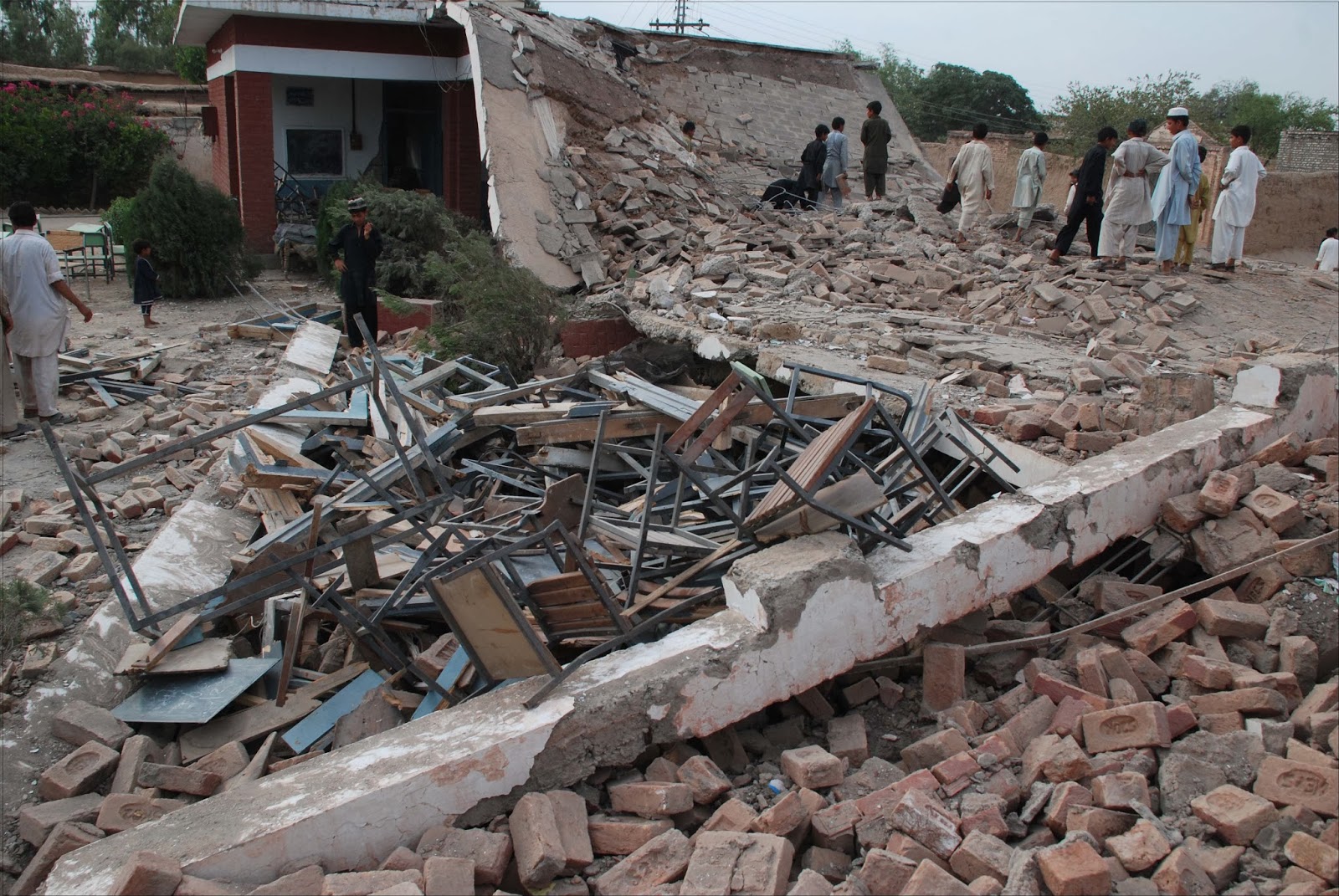
School blown up in Hangu, watchmen injured
HANGU-
A government high school for boys was blown up on Saturday by unknown militants in Tora Warai area of Hangu.
According to police, three classrooms of the school were planted with explosives by unidentified miscreants. The explosives went off with a loud bang, destroying the rooms and injuring the school’s watchman.
He was rushed to a hospital where his condition was reported to be stable.
Security authorities cordoned off the area and launched an investigation.
Hangu neighbours Orakzai Agency, a north-western tribal region bordering Afghanistan and rife with Tehreek-e-Taliban Pakistan (TTP) and Al Qaeda activists.
Shahbaz accuses militaries of blocking Indo-Pak trade deal

Punjab Chief Minister Shahbaz Sharif, who is also the younger brother of Prime Minister Nawaz Sharif, has warned the military establishments of both India and Pakistan not to block efforts to sweep aside trade barriers between the two distrustful neighbours, a report in The Guardian said on Friday.
On Indian affairs Shahbaz Sharif is widely seen as the de facto Pakistani foreign minister, conducting diplomatic missions to Delhi on behalf of his brother Nawaz Sharif.
But speaking to the Guardian he warned that distrustful “security agencies” in both Pakistan and India were one of the two main “blockages” holding back plans to liberalise trade, which the Sharifs believe will provide a desperately needed boost to Pakistan’s moribund economy.
“Security agencies on both sides need to really understand that in today’s world, a security-led vision is obviously driven by economic security,” he said. “Unless you have economic security then you can’t have general security.”
While the Sharif brothers, in common with most mainstream politicians in Pakistan, are impatient for a rapprochement with India, the military is far more wary.
Pakistan’s powerful military has warned the Sharifs against making rapid concessions, particularly in the runup to India’s general election. The incumbent Congress party is struggling to hold off a strong challenge from the Hindu nationalist Bharatiya Janata party.
Manmohan Singh, the prime minister, has long favoured better relations with Pakistan and may still travel across the frontier before the polls, which are due in April or May.
At the same time jihadi organisations in Pakistan with considerable street power have noisily protested against any trade deals while much of the former Himalayan kingdom of Kashmir remains within India.
But the brothers are determined to make progress. Sharif said disputes including Kashmir, cross-border water rights and the Siachen glacier – where soldiers from both sides are engaged in a gruelling, high-altitude standoff – would only be resolved through “dialogue and imaginative thinking”.
“If we remain hostage to our past then we will go nowhere,” Sharif said in an interview at his residence in Lahore.
“We have fought three wars and it brought nothing but devastation and destruction. It brought miseries on both sides. It added more poverty, more unemployment. It solved nothing.”
This week India expressed its annoyance with the slow pace of reform in Pakistan when Anand Sharma, India’s commerce and industry minister, cancelled a trip to Pakistan due to coincide with the second trade show to be held by Indian companies in Lahore on Friday. Sharma said Pakistan had failed to enact trade-boosting measures that had been agreed upon, including the start of round-the-clock truck passage at one of only two border crossings and the opening up to trade of hundreds of currently restricted items.
Even though Pakistan and India share thousands of miles of border, common languages and many cultural traditions, trade is negligible.
Few goods cross through the sleepy border crossing at Wagah border, which sits between Lahore and the Indian city of Amritsar – just a dozen miles from each.
Some goods are traded via third countries such as the United Arab Emirates, a practice Sharif describes as “very, very expensive”.
India also continues to press Pakistan to tackle militants targeting Indian-held Kashmir, in particular Lashkar-e-Taiba (LeT), the Punjab-based jihadist group that was responsible for the devastating terrorist attacks on the city of Mumbai in 2008.
Sharif said he told Singh during a meeting in Delhi in December that the matter was with Pakistan’s courts and “those who are found to be involved, there is no question they will be punished”.
Many observers, conscious of LeT’s historic relationship with Pakistan’s military intelligence agency, are sceptical that anyone will ever be brought to book. Hafiz Saeed, founder of LeT, lives and preaches openly in Lahore despite a $10m US government bounty on his head.
In recent weeks Maulana Masood Azhar, the chief of Jaish-e-Mohammed, a militant group that attacked the Indian parliament in 2001, has also taken up a greater public role, even addressing a public rally two weeks ago.
But Sharif said India has its own hardline groups opposed to peace efforts, naming the Rashtriya Swayamsevak Sangh, a rightwing Hindu nationalist organisation which he said regularly protested against Pakistan.
Sharif said Islamabad had presented credible evidence of Indian involvement in the separatist insurgency raging in the troubled province of Baluchistan.
“Both countries need to stop the blame game jointly resolve to move aside these roadblocks and move forward with a clear-cut agenda,” he said.
Nonetheless, in a bid to appease hardline nationalists, Pakistan has dropped efforts to grant India “most favoured nation” status. In a purely semantic reworking, it has opted instead for the less inflammatory “non-discriminatory market access”.
Analyst Ashok Mehta, a retired Indian army general, said Sharif was wrong to say Indian “security agencies” were opposed to better relations with Pakistan, because many senior officers believed an improvement in relations with Pakistan “would free us up to deal with the greater threat, which is China”.
Mehta said that, outside Kashmir, the Indian army and intelligence services were “subservient to the civilian leadership”.
“The big difference between security officials in Pakistan and India is that here they take orders from a civilian government,” he told the Guardian.
Friday, 14 February 2014
A future without water
Adnan Falak in his column ‘A future without water’ has drawn a picture of Pakistan as a country without water, the Himalaya glaciers having melted, where people facing power and water shortages line up for hours to purchase imported flour, rice, vegetables and water.
He based this on the Asian Development Outlook which says Pakistan is one of the most water-stressed countries in the world, not far from being classified as water scarce’, with less than 1,000 cubic meters available per person per year, and a storage capacity dangerously low at 30 days.
He continues, with the population of our country soaring to 256 million by 2030 and doubling by 2050, we would be experiencing enormous water stress in coming years. The first casualty of this impending water scarcity will be our agriculture sector. Across Pakistan, hundreds of cities and thousands of small towns are driven by agricultural activity. Any disruption in agriculture would have deadly implications for our economic viability and national security.
In the end he has stressed better management of our water resources. I wish he had noticed that the copious flows of tributaries of the Indus, namely Kabul, Chictral, Swat, Kuram, Siren, Haro and Soan are not being stored to provide millions of acre feet (maf) of water for irrigation and thousands of megawatts of power. Can the country afford this neglect and still hope for a better future?
ENGR KHURSHID ANWER
Govt tells Taliban to stop terror activities forthwith
Govt, Taliban peace committees agree both sides should refrain from actions that undermine ongoing peace effort * Taliban asked to release Shahbaz Taseer, Haider Gilani

SLAMABAD: The government and Taliban negotiators Friday expressed concern over a wave of deadly attacks in the country, agreeing that both militants and security forces should refrain from actions which undermine ongoing peace efforts.
The Pakistani Taliban claimed credit for a bomb blast that killed 12 policemen on a bus in Karachi on Thursday, the latest in a series of near-daily attacks since the government called for peace talks with militants to end their seven-year insurgency. “Both the committees expressed deep grief and regret over anti-peace activities and declared that such incidents would have a negative impact on the peace efforts,” a joint statement said after government and Taliban committees met on Friday.
“Referring to the recent incident in Karachi, the government committee adopted the stance that it would become difficult to continue the peace talks when anti-peace activities continue,” it said. “Therefore the Taliban must be asked to make an announcement that they are stopping all kinds of anti-peace activities and implementation of this announcement should be ensured,” the statement quoted the government side as saying.
It said that the Taliban committee “agreed” to the demand and asked the government to also make an announcement that it will not take any action which would create unrest. “For lasting peace no side should use force,” the statement quoted the Taliban side as saying. The chief of the Taliban committee, Maulana Samiul Haq, has called for a session of religious leaders on Saturday to “take the clerics into confidence” regarding the peace negotiations.
Troops have been fighting for years against homegrown insurgents in the tribal belt. Nearly 7,000 people have been killed in the TTP insurgency since it began in 2007, according to an AFP tally. The start of 2014 has seen a surge in militant violence with more than 130 people killed. An air force bombardment of TTP hideouts in North Waziristan led many to believe a major military offensive was imminent until Prime Minister Nawaz Sharif announced the peace talks.
The government and Taliban committees expressed apprehensions that anti-peace activities would make it difficult to continue the dialogue process. Both the bodies met at the Khyber Pakhtunkhwa House. During the meeting, the government’s committee demanded an immediate end to anti-peace activities. Citing the recent Karachi attack, it adopted the stance that such incidents would make it difficult to continue the talks. “The Taliban should first declare ceasing all anti-peace acts, then other confidence building measures would be discussed,” the statement added.
The meeting was attended by Irfan Sidique, Special Assistant to Prime Minister on National Affairs, Major (r) Aamir, Rahimullah Yousafzai and Rustam Shah, members of government committee.
The government committee informed the Taliban committee that any further attacks by the Tehreek-e-Taliban Pakistan (TTP) would not be tolerated. The government committee stated that if attacks continued it would become difficult to continue the dialogue process. The Taliban-nominated committee presented figures pertaining to TTP members being killed in Swabi, Peshawar and Karachi. The committee also assured their government counterparts that the Taliban would be urged to stop attacks.
The Taliban committee said the government committee’s concerns would be conveyed to the TTP and they were hopeful of a positive response. Maulana Samiul Haq said they did not allow a deadlock in talks and expressed hope that a ceasefire would be announced in 48 hours. The Taliban were asked to release Shahbaz Taseer and Ali Haider Gilani.
The Taliban committee and TTP spokesman Shahidullah Shahid made telephonic contact during the meeting of committees. According to reports, the Taliban committee apprised Shahidullah Shahid of the demand of government committee for ceasefire. The TTP spokesman said he would apprise the Taliban shura of this demand and would get back to the committee.
Irfan Siddiqui, coordinator of the committee formed by the government to hold talks with the Taliban, said Thursday that they had told the Taliban committee through a letter that terror activities will adversely affect the atmosphere needed for negotiations. Siddiqui, who refused to disclose contents of the letter, said that the Taliban committee had been told that terrorist attacks should immediately be stopped. He said that they further told the Taliban committee that the TTP should refrain from making such statements that might affect atmosphere.
Rangers vehicle targeted in Karachi suicide attack

KARACHI: A Rangers wing commander’s vehicle was targeted in a suicide attack in the Qayyumabad C area of Karachi on Friday, Express News reported.
The vehicle was travelling from Sea View onto Korangi Road when the incident occurred. Korangi’s SP Usman Bajwa confirmed that it was a suicide attack.
The suicide bomber was reportedly on foot and was not close to his target when he detonated the explosives.
The vehicle was damaged but police confirmed that Rangers personnel remained unharmed after the blast.
Police said that body parts – believed to be of the suicide bomber – were found near the site of the blast. The body parts have been taken to Jinnah Post Graduate Medical Center for DNA analysis.
Rangers and police have cordoned off the area and an investigation is ongoing.
Subscribe to:
Posts (Atom)