Thursday, 1 January 2015

Crunch time for Hafeez as action scrutinised in Chennai

Mohammad Hafeez.

LAHORE: In a surprising development, experienced all-rounder Mohammad Hafeez appeared for the informal bio-mechanic test on his bowling action in Chennai on Wednesday, and the off-spinner is about to return to Pakistan shortly.

A PCB spokesman said it would take a couple of days to receive the result of the test.
According to the spokesman, Hafeez was scheduled to appear for the test before the International Cricket Council-accredited lab in Chennai on Jan 3.
However, according to some latest reports, Hafeez underwent the test on Wednesday and now he was about to return to Pakistan. He is expected to reach here early Friday morning.
The Pakistan off-spinner had left for Chennai on Tuesday.
The spokesman to a question said the PCB had not received the report of the test, which is important for Pakistan in deciding Hafeez’s World Cup fate. The report was expected to be received in the next couple of days, he added.
Though the PCB is ready to select 34-year-old Hafeez as batsman, some experts fear the veteran player — in case he fails to get his bowling action cleared — may prove a liability during the World Cup, arguing the 153-ODI veteran is only useful as all-rounder.
“It may be a risky decision to pick Hafeez just as batsman but due to his vast experience his presence in the World Cup squad is going to strengthen Pakistan [squad], at least on paper,” a PCB official told Dawn on the condition of anonymity.
“Yes, as an alternative of Hafeez, we can select Azhar Ali who can also bowl and we may also ask another opener Ahmed Shehzad to also bowl as he has the ability to do so, but still the matter is revolving around ifs and buts,” the official added.
Meanwhile, though the PCB has not received the result of Hafeez’s test conducted in Chennai, rumours are making rounds that the Board is not that hopeful about the clearance of Hafeez’s bowling action and therefore it has decided to look for alternative ways to cope with the problem.
Earlier, top-class off-spinner Saeed Ajmal who played match-winning role for Pakistan in all three formats during the last few years, is also not available for the mega event. And the reason was the same — illegal bowling action.
Ajmal’s action was cleared by the ICC, despite extensive rehab work done on him by the PCB with the assistance of former Test off-spinner Saqlain Mushtaq.
Hafeez was reported for an illegal bowling action by umpires during the first Test against New Zealand in November.
Later, the ICC asked him to appear before the National Cricket Performance Centre in Loughborough where he appeared on Dec 7 but failed to clear the test.
However, instead of starting his rehab process the PCB and the team management preferred to include him in the third Test against New Zealand and later to play in the five-match ODI series against the same outfit in the UAE.
Now after that series the PCB has started the work to get Hafeez cleared as the Jan 7 deadline to submit the World Cup squad draws near.

Differences between MH370 and AirAsia incidents


Air force soldiers on-board a Hercules C130 monitor the Belitung Timur sea during search operations for the missing AirAsia flight QZ8501 near Belitung island, Indonesia, on Monday. — Reuters

SINGAPORE: The disappearance of an AirAsia passenger jet soon after take-off inevitably brings back memories of the mystery behind Malaysia Airlines Flight 370 that is still missing after it disappeared nine months ago.
But while it is still not known what happened to AirAsia Flight 8501, there appear to be no reasons its presumed crash is anything other than a regular — if tragic — aviation disaster, whose cause will become apparent only when the wreckage and flight data recorders are recovered.
But until that happens, comparisons will be made of the circumstances leading up to the two events, the responses by regional authorities and airline officials, and the nature and challenges of the search efforts.
Here are some of the differences between the two events, based on what authorities have publicly disclosed about the plane, which lost contact with ground control in Indonesia early Sunday morning, 42 minutes after taking off from Surabaya airport on the way to Singapore with 162 people on board:
Foul play
Authorities suspect Flight 370 was deliberately diverted by someone on board, and suspicions of foul play emerged within days of its disappearance. There has been no suggestion that the AirAsia flight is anything but an accident, meaning the aircraft should have crashed not far from the spot where it fell off the radar. Indonesia’s Transportation Ministry says its pilots asked permission to turn left and fly higher to avoid clouds three minutes before the jet was last seen on radar. That strengthens early speculation that adverse weather, or the pilot’s response to it, was a factor in the accident.
Southern Indian Ocean
Based on data “pings” from Flight 370, authorities believe the plane crashed into the southern Indian Ocean, a vast, deep, isolated stretch of water far from the last known position of the plane.

The AirAsia flight was carrying enough fuel for about four hours of flying. Assuming it crashed soon after it dropped off the radar, finding it should be far easier. The Java Sea is a contained body of water, shallow, and criss-crossed by planes and ships. In normal circumstances, a plane leaves wreckage even if it enters the water largely intact.
It can take several days for it to be spotted, however. On Jan 1, 2007, an Indonesian jet liner carrying 102 people went missing on a domestic flight from Jakarta to Sulawesi. A search effort across land and sea turned up nothing until 11 days later when a fisherman found the plane’s right horizontal stabiliser.
Airline communications
Malaysia Airlines was severely criticised following the disaster for giving out contradictory and vague information. So far, that has not happened with the latest accident. The boss of AirAsia, Tony Fernandez, has tweeted about the incident and what the company is doing, drawing praise not scorn. Managing communications about the loss the flight will become more challenging if the wreckage is not found quickly. The fact that the overwhelming majority of the passengers are Indonesians and that it was an Indonesian-registered company operating the plane should mean less pressure, however. Around two-thirds of the passengers on Flight 370 were Chinese, with the rest coming from all over the world, only adding to what was already an unprecedented situation. — AP
Published in Dawn, December 30th, 2014

Palestinian president signs up to join international criminal court

Move will anger Israel and US and paves way for court to take jurisdiction over crimes committed in Palestinian territories

Mahmoud Abbas has signed the Rome statute, the ICC’s founding treaty. Photograph: Farouk Batiche/AFP/Getty Images
The Palestinian president, Mahmoud Abbas, dramatically moved to join the international criminal court on Wednesday, setting Palestinians on a diplomatic collision course with Israel and Washington, and risking imposition of US sanctions.
Abbas signed the Rome statute governing the court and 19 other international agreements, potentially opening the way to Palestinians to pursue Israel for war crimes in the court of last resort based in The Hague.
It followed the rejection by the UN security council of a Jordanian-backed resolution on behalf of Palestine calling for the end to the Israeli occupation by 2017 and the establishment of a Palestinian state based on pre-1967 borders.
Abbas’s move came at the end of 24 hours of diplomatic tension when – under pressure from other members of the Palestinian leadership – he followed through on his long-threatened plan to join the ICC.
In response to Abbas’s signing of the treaty Israel’s prime minister, Binyamin Netanyahu, warned that it was Palestinians, not Israel, that should be concerned about the ICC.
“It is the Palestinian Authority – which is in a unity government with Hamas, an avowed terrorist organisation that, like Isis, perpetrates war crimes – that needs to be concerned about the international criminal court in the Hague,” Netanyahu said, adding that Israel would take unspecified “retaliatory steps”.
The US also condemned the move which it described as “deeply troubling” with State Department spokesman Jeff Rathke saying it was “an escalatory step that will not achieve any of the outcomes most Palestinians have long hoped to see for their people”.
He added: “Today’s action is entirely counter-productive and does nothing to further the aspirations of the Palestinian people for a sovereign and independent state. It badly damages the atmosphere with the very people with whom they ultimately need to make peace. As we’ve said before, the United States continues to strongly oppose actions – by both parties – that undermine trust and create doubts about their commitment to a negotiated peace. Our position has not changed. Such actions only push the parties further apart.”
Acceding to the Rome treaty – the first step in joining the court – had been seen by many as the nuclear option in the recent Palestinian efforts to advance their case for statehood in international forums.
“They attack us and our land every day, to whom are we to complain? The security council let us down – where are we to go?” Abbas told a gathering of Palestinian leaders in remarks broadcast on official television.
“We want to refer to international institutions, and this is one we are referring to, and we’ll complain to these people,” he added, before signing the documents.
Abbas had been under heavy domestic pressure to take action against Israel following months of tension fuelled by the collapse of US-brokered peace talks, a 50-day war between Israel and Palestinian militants in Gaza, a spate of deadly Palestinian attacks on Israeli targets and Israeli restrictions on Palestinian access to a key Muslim holy site in Jerusalem. Tuesday’s defeat in the UN security council further raised pressure on Abbas to act. There was a palpable sense of fury in the Palestinian leadership over US and Israeli-led efforts that derailed the UN resolution that called for the ending of the Israeli occupation.
The resolution was opposed by the US and Israel and saw both the US secretary of state, John Kerry, and Israeli prime minister, Binyamin Netanyahu, call the president of Nigeria, Goodluck Jonathan, on the eve of the vote to persuade him to abstain.
“Even half an hour before the vote Nigeria indicated it was committed to voting for the resolution,” one Palestinian source involved in the negotiations commented furiously. “We knew that Rwanda, South Korea and Australia would not back it, but we believed Nigeria was on board.”
Britain, Rwanda, Lithuania and South Korea joined Nigeria in abstaining. Welcoming the UN vote, Netanyahu extended his special thanks to Nigeria and Rwanda. “This is what tipped the scales,” he said.
Signalling that the vote would not mark an end to the campaign to win a security council resolution, Palestinian and French officials indicated they would continue working to find a text to put to the UN, perhaps within weeks.
Before the vote the Palestinian negotiator Saeb Erekat said the Palestinians could return again to the security council, which will have five new members starting on Thursday who are viewed as more sympathetic to their cause.
However, despite signalling a sharp defeat to the Arab-supported campaign to get security council backing for a moves towards a Palestinian state, the vote held minimal comfort for Israel, seeing two European countries – France and Luxembourg – support the resolution. The US also made clear it was not voting for the status quo in opposing the resolution.
“We voted against this resolution not because we are comfortable with the status quo. We voted against it because … peace must come from hard compromises that occur at the negotiating table,” the US ambassador Samantha Power said.
She criticised the decision to bring the draft resolution to a vote as a “staged confrontation that will not bring the parties closer”. She added that the resolution was deeply unbalanced and did not take into account Israel’s security concerns.
The ICC can prosecute individuals accused of genocide, crimes against humanity and war crimes committed since 1 July 2002, when the Rome statute came into force.
According to the ICC’s official website the Rome treaty has been ratified by 122 states.
The court can pursue an individual only if crimes were committed on the territory of a state party – one that has signed and ratified the Rome statute – or by a citizen of such a state. Israel has signed but not ratified the treaty.

Saturday, 20 December 2014

View from the courtroom: Law not clear on IDPs, their rights


The large-scale displacement of people from different regions is a recurring phenomenon in Pakistan, especially in the Federally Administered Tribal Areas and Khyber Pakhtunkhwa. Both natural and manmade disasters have occurred during the past decade triggering displacements, but militancy is currently the prime cause of this phenomenon.

While thousands of terrified people have now been fleeing their areas in North Waziristan after the launch of military operation against militants, the situation on the ground is still murky regarding the responsibilities of different authorities towards these displaced people.

Same situation was witnessed when people were displaced from other tribal agencies, including Bajaur, Mohmand and Khyber. The federal and provincial authorities had continued to pass the responsibility to each other when issues surfaced related to the IDPs staying at the Jalozai Camp in Nowshera.
The prime law dealing with disaster management is the National Disaster Management Act (NDMA) 2010, which was enacted in Dec 2010. It is unfortunate that while displacement is a recurring phenomenon no definition of an IDP (internally displaced person) is given in the law.

Experts believe that both the federal and provincial governments should have modified this law with the passage of time so as to include the definition and rights of the IDP.

However, so far the governments have not shown any interest in this regard.
Due to lack of clarity in the law different issues have been surfacing. Unlike refugees, the IDPs are citizens of the country and entitled to the fundamental rights enshrined in the Constitution of Pakistan just like other
citizens.
Reports have been surfacing regarding the decision taken by the Sindh and Punjab governments to curtail the
movement of IDPs on different grounds.
By placing such restrictions, these governments have clearly violated the constitutional provision guaranteeing freedom of movement as well as the right of an individual to move freely throughout Pakistan and reside and
settle in any part thereof.

Following the Constitution (Eighteenth Amendment) Act, 2010, disaster management is now a provincial subject and the provincial assemblies are now being empowered to make amendments to the NDMA 2010.
In Khyber Pakhtunkhwa, the previous government had enacted the National Disaster Management (Khyber Pakhtunkhwa) (Amendment) Act, 2012, through which amendments were made to the NDMA.
The most important amendment made by the provincial government was to do away with the provision of setting up of the district disaster management authority for each of the district and instead introduced setting
up of district disaster management units.

The NDMA 2012 includes both natural and manmade disasters. It defines a disaster as “a catastrophe, or a calamity in an affected area, arising from natural or manmade causes, or by accident which results in a substantial loss of life or human suffering or damage to, and destruction of, property.” Moreover, under the law an “affected area” means an area or part of the country affected by a disaster.

This law spells out “disaster management” as “managing the complete disaster spectrum, including preparedness, response, recovery and rehabilitation, and reconstruction.”
The law provides for establishment of National Disaster Management Commission with several dignitaries as its members. The prime minister is the ex-officio chairperson of the commission.

While the commission is the supreme policy-making body its meetings are held rarely which clearly depicts how much priority is being given to disaster management. The Act also provides for establishment of the disaster management authorities on national and provincial level.

Section 11 of the Act makes it binding on the national authority to make guidelines for the provision of relief to affected persons. It states: “Subject to directions of the National Commission, the National Authority shall lay down guidelines for the minimum standards of relief to be provided to persons affected by disaster which shall include: the minimum requirements to be provided in the relief camps in relation to shelter, food, drinking water, medical cover and sanitation; the special provisions to be made for vulnerable groups; ex gratia assistance on account of loss of life as also assistance on account of damage to houses and for restoration of means of livelihood; and, such other relief as may be necessary.”

The UN drafted the Guiding Principles on Internal Displacement in 1998 which is a non-binding set of guidelines. These principles define IDPs as “persons or groups of persons who have been forced or obliged to leave their homes in particular as a result of or in order to avoid the effects of armed conflict ---- and who have not crossed an internationally recognised State border.”
It further provides that authorities should ensure that proper accommodation is provided to the displaced persons and such displacements are effected in satisfactory conditions of safety, nutrition, health and hygiene.
It would be appropriate for the government to make amendments to the relevant law in accordance with these guidelines. It will be appropriate to clearly define IDPs, their rights and responsibilities to be carried out by the respective governments and authorities.

Monday, 21 April 2014

Attack on Hamid Mir: You have the right to remain silent

Hamid Mir was shot because of his calls to respect the human rights of the Baloch, because he stood with Mama Qadeer in the VMBP’s Long March.

No, it was because he didn’t give enough space to the Taliban’s viewpoint.

No, silly, it’s because a distraction was needed from the non-stop coverage of Musharraf in Karachi. Now, under the cover of this distraction, the former president can safely fly the coop. That’s right; guess which party controls every falling leaf in Karachi and was allied to Musharraf? Do the math.

Don’t be ridiculous; he staged the attack on himself for ratings/sympathy/cover of some kind. I mean, just look at that single, blurred, frame I saw of the car. Where’s the blood? Surely that’s proof positive? I mean if Malala can do it why can’t Hamid Mir? I even wrote a blog about it after spending 15 minutes googling gunshot victims. Open your eyes, people. I’m an expert.

That’s a short summary of the social media theories revolving around the attack on Mr Mir.
Armed with an internet connection and the ability to understand simple mathematics (2+2=5), our budding forensic investigation experts have already decided who the triggermen in this episode are.
Then, of course, there are the ‘fastest finger first’ condemnation bots, because every second counts here. There are those who will time the politicians racing to get to the hospital first, because nothing spells real concern like a timely photo op.
Then there’s the ‘stay safe’ crowd. Well-meaning, and when you really have nothing more to say, I suppose that’s the best one can do. And really, it is all about what’s being said, to whom and for what reason. Because clearly, there are those who would be happier if the media as a whole just finally shut up.
‘But that’s not going to happen!’ say others, mostly journalists.

The media will not be silenced, their voice will not be muzzled. Not by one bullet or a hundred.

Now that’s reassuring. That, despite threats, attacks and murders, the media will somehow continue to speak out (as it does now and then) against injustice, criminal gangs, terrorist organisations, out of control state agencies and so on and so forth.
But that’s just wishful thinking. There’s no point harking to the Zia-era repression and pointing out the stalwarts who stood up to it.
The past is another country; one in which your life wasn’t worth a few thousand rupees at most, even after adjusting for inflation.

Also read | Journalists in Pakistan: Here be dragons

The media will be muzzled; will grow silent simply because there is no security and probably will never be any justice. Not just for journalists, but for anyone at all. This is the reality we are faced with.
Let's be honest with ourselves: We aren't Hamid Mir. We aren't Mustafa, Raza Rumi, the Hazara or any other victim du jour you choose. We are, all of us, on our own.
So stay safe, until you’re not.

Sunday, 16 March 2014

Blow for Australia as Johnson ruled out of World T20


Paceman Mitchell Johnson was ruled out of the Twenty20 World Cup by an infected big toe on Sunday in a blow to Australia's hopes of snaring the one major international trophy they have never won.
The 32-year-old, the form bowler in world cricket at the moment, will be replaced by fellow left-arm quick Doug Bollinger for the March 16-April 6 tournament in Bangladesh.
Johnson fired Australia to a 5-0 Ashes sweep over the New Year and a 2-1 test series triumph in South Africa over the last few weeks but cut the big toe on his right foot in the third test against the Proteas.
The initial prognosis was that his departure for Bangladesh would only be delayed but Johnson had not made the sort of progress originally envisioned.
"We have given Mitchell as long as we can but unfortunately his infection hasn't responded to the treatment as quickly as we had hoped with swelling remaining in his toe and foot," Cricket Australia's Dr Justin Paoloni said in a news release on Sunday.
"It is difficult to say how quickly the infection will take to resolve and due to the high risk of infection recurrence with a return to bowling we feel it is in the best interests of Mitchell's health for him to continue to receive intensive treatment in Perth."
Bollinger, 32, has played just two Twenty20s for Australia, against South Africa in 2011, but brings a wealth of experience of the shortest form of the game in the sub-continent courtesy of his time in the Indian Premier League.
"Unfortunately Mitchell Johnson has been ruled out of the ICC World Twenty20," head selector John Inverarity said.
"This is disappointing news as it was anticipated that Mitch would have a significant impact with his pace and menace.
"Doug Bollinger has been called into the squad to replace Mitchell.
"Doug has had significant experience in the sub-continent and in international white ball cricket and his ability to bowl with good pace was a factor in his selection."
All-rounder James Faulkner, who missed the test tour of South Africa because of knee surgery, was another injury doubt but is expected to be fit to play.
Australia open their campaign against Pakistan in Mirpur on March 23.

Iraqi bill to legalise child marriage criticised


BAGHDAD: A contentious draft law being considered in Iraq could open the door to girls as young as nine getting married and would require wives to submit to sex on their husband's whim, provoking outrage from rights activists and many Iraqis who see it as a step backward for women's rights.

The measure, aimed at creating different laws for Iraq's majority Shia population, could further fray the country's divisions amid some of the worst bloodshed since the sectarian fighting that nearly ripped the country apart after the US-led invasion.

It also comes as more and more children under 18 get married in the country.

''That law represents a crime against humanity and childhood,'' prominent Iraqi human rights activist Hana Adwar told The Associated Press.

''Married underage girls are subjected to physical and psychological suffering.

Iraqi law now sets the legal age for marriage at 18 without parental approval. Girls as young as 15 can be married only with a guardian's approval.

The proposed new measure, known as the Jaafari Personal Status Law, is based on the principles of a Shia school of religious law founded by Jaafar Al Sadiq, the sixth Shia imam.

Iraq's Justice Ministry late last year introduced the draft measure to the Cabinet, which approved it last month despite strong opposition by rights groups and activists.

The draft law does not set a minimum age for marriage. Instead, it mentions an age in a section on divorce, setting rules for divorces of girls who have reached the age of nine years in the lunar Islamic calendar.

It also says that's the age girls reach puberty. Since the Islamic calendar year is 10 or 11 days shorter than the Gregorian calendar, that would be the equivalent of eight years and eight months old.

The bill makes the father the only parent with the right to accept or refuse the marriage proposal.

Critics of the bill believe that its authors slipped the age into the divorce section as a backhanded way to allow marriages of girls that young.

Already, government statistics show that nearly 25 per cent of marriages in Iraq involved someone under the age of 18 in 2011, up from 21 per cent in 2001 and 15 per cent in 1997.

Planning Ministry spokesman Abdul Zahra Hendawi said the practice of underage marriage is particularly prevalent in rural areas and some provinces where illiteracy is high.

Also under the proposed measure, a husband can have sex with his wife regardless of her consent.

The bill also prevents women from leaving the house without their husband's permission, would restrict women's rights in matters of parental custody after divorce and make it easier for men to take multiple wives.

Parliament must still ratify the bill before it becomes law. That is unlikely to happen before parliamentary elections scheduled for April 30, though the Cabinet support suggests it remains a priority for Prime Minister Nouri Al Maliki's administration.

Al Maliki is widely expected to seek a third term. Baghdad-based analyst Hadi Jalo suggested that election campaigning might be behind the proposal.

''Some influential Shia politicians have the impression that they should do their best to make any achievement that would end the injustice that had been done against the Shia in the past,'' Jalo said.

The formerly repressed Shia majority came to power after the 2003 US-led invasion that ousted Saddam Hussein's Sunni-led regime. Since then, Shia religious and political leaders have encouraged followers to pour in millions into streets for religious rituals, a show of their strength.

Iraqi Justice Minister Hassan Al Shimmari, a Shia, has brushed off the criticism of the bill. His office introduced a companion bill that calls for the establishment of special Shia courts that would be tied to the sect's religious leadership.

Al Shimmari insists that the bill is designed to end injustices faced by Iraqi women in past decades, and that it could help prevent illicit child marriage outside established legal systems.

''By introducing this draft law, we want to limit or prevent such practices,'' Al Shimmari said.

But Sunni female lawmaker Likaa Wardi believes it violates women's and children's rights and creates divisions in society.

''The Jaffari law will pave the way to the establishments of courts for Shia only, and this will force others sects to form their own courts. This move will widen the rift among the Iraqi people,'' Wardi said.

New York-based Human Rights Watch also strongly criticized the law this week. ''Passage of the Jaafari law would be a disastrous and discriminatory step backward for Iraq's women and girls,'' deputy Middle East director Joe Stork said in a statement. ''This personal status law would only entrench Iraq's divisions while the government claims to support equal rights for all.''

It is unclear how much support the bill enjoys among Iraqi Shia, but Jalo, the analyst, believes that it would face opposition from secular members of the sect.

Qais Raheem, a Shia government employee living in eastern Baghdad, said the draft bill contradicts the principles of a modern society.

"The government officials have come up with this backward law instead of combating corruption and terrorism," said Raheem who has four children, including two teenage girls. "This law legalizes the rape and we should all reject it."

Buses for women easing the way?

A WEEK and a half ago, I went looking for the pink women’s buses said to be found at the bus terminal near the Islamabad Secretariat, finally spotting one lone minibus — looking like a pink blob in the distance — parked in a rather deserted terminal space.

That bus was waiting for another one coming from Rawalpindi to return so that it could get en route. Under the scheme, seven buses run on the Secretariat to Rawalpindi’s Saddar route, called route number 1, from 7am to 7pm.

I thought it best to catch the last bus in the evening from the stop nearest to the Marriott Hotel. The female conductor, wearing a clean white and pink uniform, eyeliner and hoop earrings, explained that they had been a little late because she and the (male) driver had to eat a quick late lunch. Friendly, professional and polite, both she and the driver were patient, even if the bus was a little too pink. It could seat about 20 people. On that particular ride, apart from myself, the driver and the conductor, there were 10 commuters.

The first passenger was a girl clad in a black abaya and a shawl, who had used the service earlier. A woman hopped on from the Islamabad College for Girls stop in F-6. “This is my first ride in this bus,” she told the conductor.

“I’m very pleased. You should wait for a few minutes here, many teachers would take it.” Having bought her ticket and receiving Rs3 in change out of the Rs30, she was appreciative: “The male conductors in the regular bus route never give change.” Over the next few stops three more women got in and conversation about the comfort of the facility commenced. Every passenger had unfortunate experiences to share on the “other bus”. They spotted a satchel with brochures of a cellular company hanging from one of the seats and began asking about services. The conductor was well-informed about the company’s new packages, but you cannot buy phone-credit on the bus.

When the bus reached Faizabad Interchange, the entrance into Rawalpindi from Islamabad, one young woman was talking to the college teacher. “Two days ago a bus driver charged me double the fare at Faizabad,” she complained. “He refused to take me further unless I paid him another Rs30.”

This declaration started another round of anecdotes, a common one being the rejection of female commuters by male conductors and drivers. “The worst is when they will not allow women in, despite the availability of seats,” explained a student. The college teacher confirmed: “They insult us and dare us to file complaints against them.”

In an ideal world, public transport would be gender-friendly, run with accountability, would run on time and female commuters would not need protection. In the real world, however, the governments are still struggling to achieve secure mobility for women.

The relief provided by gender-specific transportation has been introduced in cities in Japan, India, Brazil, Guatemala, Egypt, Iran, Indonesia and Mexico. Pakistan attempted an experiment with women-only public transport in 2012, when three buses (also coloured pink) were introduced, but two were withdrawn due to the lack of female commuters.

But the Punjab government has not given up on the idea for Lahore entirely. Two more buses are to be introduced in Lahore. The chief of the Lahore Transport Company (LTC), Khawaja Haider Latif, told me that more women-only vans would only be added after a survey to estimate the need was conducted.

So far, Pakistan has not explored thoroughly the capacity of gender-specific public transport to sustain itself financially, curb harassment and navigate during rush hour.

To address concerns of female commuters, it would be a step in the right direction if the authorities tried to count the number of women using public transport in the country.

A commuter from the bus I took to Rawalpindi, Mrs Naseem, told me her daughter used to take a bus to go to her college at the Murree Road terminal. “It was humiliating and frustrating for us when the bus would not come on time or not come at all,” she said.

“Nobody ever thinks of the ghareeb (the poor). I wish this bus had been running when my daughter was a student.”

Monday, 17 February 2014

Dollars cannot buy eyesight for the blind king

The astrologer told the king that his first wife will give birth to a son who will cause him to lose his sight. The king got upset, as kings always do, and banished his wife to a forest where she gave birth to a son.
The son grew up in the jungle, knowing that he was a prince, although he had never seen his father. The wife and the son continued to love the king, as they always do in such stories. They never felt bad for being kicked out of the kingdom on an astrologer’s prediction.
The queen named her son Taj ul-Mulk, the crown of the state, although he had no state. Since he lived in a forest, Taj was a great hunter-gatherer and always brought home plenty of food.
Once, while chasing a deer, he met an old and over-dressed man who was wearing a strange headgear. He did not yet know that this was called a crown, which gave his father the power to banish him and his mother.
The old man too was surprised to see a half-naked young man in the jungle as Taj had only covered his waist with the skin of a deer he had hunted last spring.
The king wanted to know who this young man was but he was too thirsty to ask for anything but water. And while he was drinking the water Taj gave, he looked closely at the young man’s face and something very strange began to happen.
Taj’s face blurred. The eyes were first to disappear, then the nose, the ears, the forehead, hair and then the whole face was gone. Alarmed, the king looked for the young man’s torso, hands, legs and feet but saw nothing.
The king panicked. “Hey, where are you?” he shouted.
“Right here, in front of you,” said the young man.
“Then, why can’t I see you?” the king asked.
And before the young man could answer, he heard someone else approaching. The king took a deep breath and could tell that it was a woman. Kings can always smell a woman, even from a safe distance.
“Who are you?” he asked the woman.
“Take another deep breath, your majesty, and you may recognise me,” the woman said.
The king did as told but did not recognise the woman as kings quickly forget the women they abandon.
But when the woman spoke again, the king said: “Oh, that’s you! Then, this must be your son.”
“And your son too,” said the queen.
“Yes, my son too and now I know what’s happening. I am losing my sight,” the king said.
“Yes, nobody can escape his kismet, not even the king,” said the queen. “Now you are totally blind.”
“Yes, now that I am totally blind, I recognise this young man as my son, the first born,” said the king and asked the young man to rise and take his rightful place.
“Your majesty, you need a staff more than an heir to your throne,” said the young man and rushed to fetch him a stick. But his mother, who still missed the pomp and show of the royal life, stopped him and pushed him towards the blind king. “This is your staff, your majesty.
Take him wherever you go,” she said.
“Go? Where can a blind man go but to his cottage,” said the king.
“Take me to where you live and I will live with you for as long as it takes me to regain my sight.”
“Can it be regained?” asked the queen.
“Yes, of course. That’s why I agreed to abandon my youngest wife, who is just 16, and live with you here in the jungle,” the king replied.
The astrologer who predicted that the king will lose his sight the moment he saw his first born also said that his first born can restore it too, provided he is recognised as the rightful heir to the throne.
“The astrologer also said that no matter what precautions I take, I will lose my sight one day. So I was ready for it,” the king said.
Then he explained that when he learned the full prediction, he decided to banish his first wife while she was still pregnant. The move created two possibilities: either the king will never see his first son or he will see him when he is old enough to restore his sight.
“Today, the prediction came true. I met my first born and lost my sight. But I met him when he is 20, not two. Now he can bring the Flower of Sight for me,” the king said.
“The Flower of Sight, never heard of it,” said the queen.
“Where does it grow?” asked Prince Taj.
“It grows in the garden of Princess Bikawali. She is the daughter of the King of jinn,” the king said. “Let’s go back to your cottage. I will tell you how to get there and get the flower.”
Taj was not very keen to go to the land of the jinn but his mother forced him to.
The king was old fashioned, so he suggested the prince buy some ships, recruit soldiers and cross the seven seas with his own armada.
But when Taj went to the nearest city to build an armada, he was told that those days are long gone. Instead, he was sent to a travel agent who told him that he will first need a visa and for which he needs dollars.
He went back to the king who said if he had dollars he would have bought the flower instead of sending his first born on a perilous journey. He also explained that while he arrives in the city of jinn, he will first have to earn some dollars to visit the garden and plan how to bring the flower home.
Prince Taj borrowed some gold from his father and bought dollars from the black market. But those dollars only bought him a visa. So he borrowed more gold to buy dollars to buy an air ticket.
Then, he needed more gold to buy dollars to rent a room, some more for grocery, for emergency medical care, for transport and more and more … By the time Taj boarded his plane, the king had run out of his gold.
To cut a long story short, Prince Taj is now in the city of jinn. He spent all his dollars in less than a month. Now he works at a gas station during the week days and at a bar during the weekend.
About two months after he arrived in the city, he felt confident enough to ask people about Princess Bikawali, her garden and the Flower of Sight. And he was surprised to learn that almost everybody he met had come here for the princess and the flower.
Meeting the princess was not difficult. If you had enough dollars to buy her a dinner, she would oblige you. But the garden and the flower were a different story. Some of them had been here for years and they were still as far away from the garden as they were on their first day.
Now Taj was also in his second year and back home, his father, the king was getting used to his blindness.

Saturday, 15 February 2014

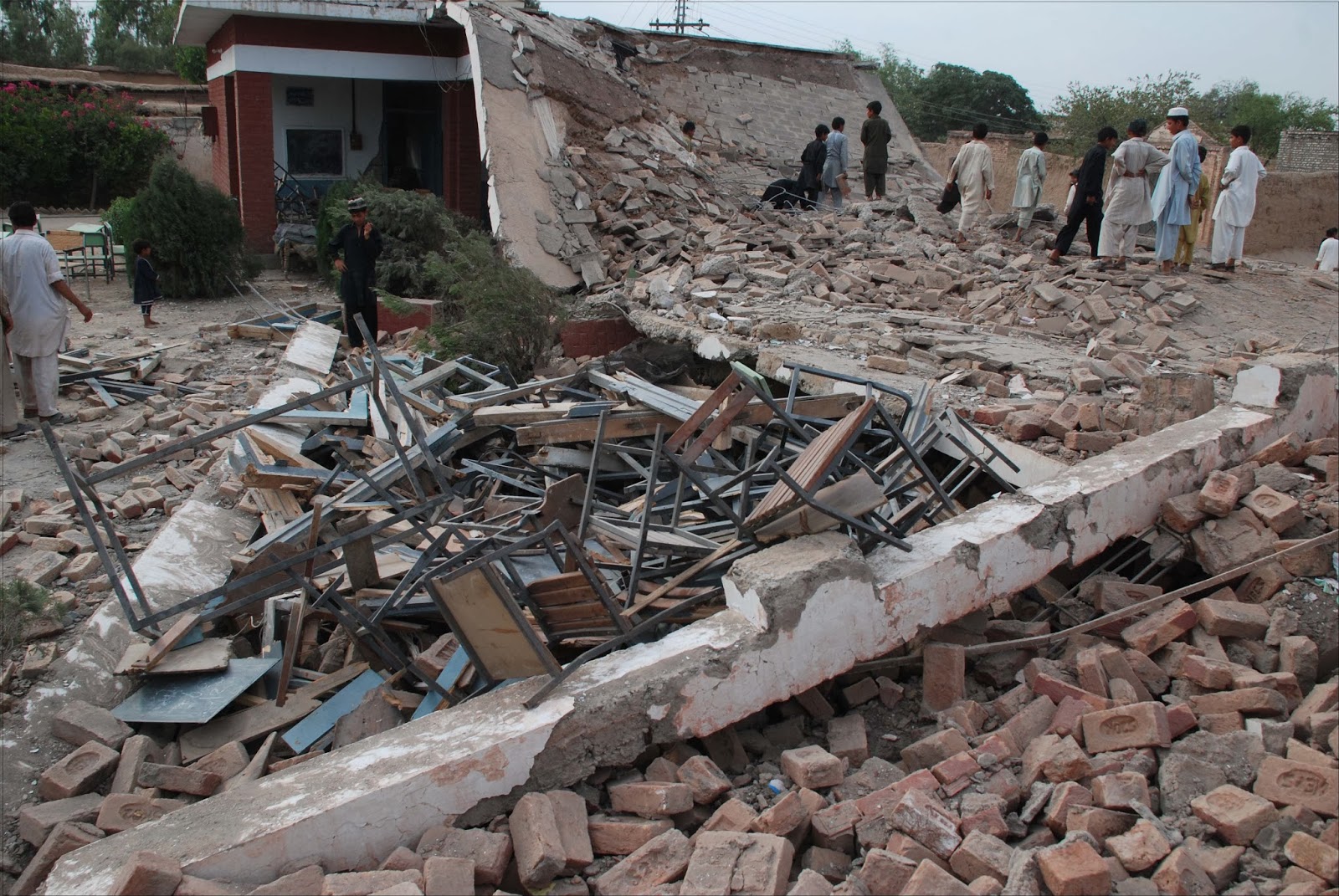
School blown up in Hangu, watchmen injured

HANGU-
A government high school for boys was blown up on Saturday by unknown militants in Tora Warai area of Hangu.
According to police, three classrooms of the school were planted with explosives by unidentified miscreants. The explosives went off with a loud bang, destroying the rooms and injuring the school’s watchman.
He was rushed to a hospital where his condition was reported to be stable.
Security authorities cordoned off the area and launched an investigation.
Hangu neighbours Orakzai Agency, a north-western tribal region bordering Afghanistan and rife with Tehreek-e-Taliban Pakistan (TTP) and Al Qaeda activists.

Shahbaz accuses militaries of blocking Indo-Pak trade deal


Punjab Chief Minister Shahbaz Sharif, who is also the younger brother of Prime Minister Nawaz Sharif, has warned the military establishments of both India and Pakistan not to block efforts to sweep aside trade barriers between the two distrustful neighbours, a report in The Guardian said on Friday.
On Indian affairs Shahbaz Sharif is widely seen as the de facto Pakistani foreign minister, conducting diplomatic missions to Delhi on behalf of his brother Nawaz Sharif.
But speaking to the Guardian he warned that distrustful “security agencies” in both Pakistan and India were one of the two main “blockages” holding back plans to liberalise trade, which the Sharifs believe will provide a desperately needed boost to Pakistan’s moribund economy.
“Security agencies on both sides need to really understand that in today’s world, a security-led vision is obviously driven by economic security,” he said. “Unless you have economic security then you can’t have general security.”
While the Sharif brothers, in common with most mainstream politicians in Pakistan, are impatient for a rapprochement with India, the military is far more wary.
Pakistan’s powerful military has warned the Sharifs against making rapid concessions, particularly in the runup to India’s general election. The incumbent Congress party is struggling to hold off a strong challenge from the Hindu nationalist Bharatiya Janata party.
Manmohan Singh, the prime minister, has long favoured better relations with Pakistan and may still travel across the frontier before the polls, which are due in April or May.
At the same time jihadi organisations in Pakistan with considerable street power have noisily protested against any trade deals while much of the former Himalayan kingdom of Kashmir remains within India.
But the brothers are determined to make progress. Sharif said disputes including Kashmir, cross-border water rights and the Siachen glacier – where soldiers from both sides are engaged in a gruelling, high-altitude standoff – would only be resolved through “dialogue and imaginative thinking”.
“If we remain hostage to our past then we will go nowhere,” Sharif said in an interview at his residence in Lahore.
“We have fought three wars and it brought nothing but devastation and destruction. It brought miseries on both sides. It added more poverty, more unemployment. It solved nothing.”
This week India expressed its annoyance with the slow pace of reform in Pakistan when Anand Sharma, India’s commerce and industry minister, cancelled a trip to Pakistan due to coincide with the second trade show to be held by Indian companies in Lahore on Friday. Sharma said Pakistan had failed to enact trade-boosting measures that had been agreed upon, including the start of round-the-clock truck passage at one of only two border crossings and the opening up to trade of hundreds of currently restricted items.
Even though Pakistan and India share thousands of miles of border, common languages and many cultural traditions, trade is negligible.
Few goods cross through the sleepy border crossing at Wagah border, which sits between Lahore and the Indian city of Amritsar – just a dozen miles from each.
Some goods are traded via third countries such as the United Arab Emirates, a practice Sharif describes as “very, very expensive”.
India also continues to press Pakistan to tackle militants targeting Indian-held Kashmir, in particular Lashkar-e-Taiba (LeT), the Punjab-based jihadist group that was responsible for the devastating terrorist attacks on the city of Mumbai in 2008.
Sharif said he told Singh during a meeting in Delhi in December that the matter was with Pakistan’s courts and “those who are found to be involved, there is no question they will be punished”.
Many observers, conscious of LeT’s historic relationship with Pakistan’s military intelligence agency, are sceptical that anyone will ever be brought to book. Hafiz Saeed, founder of LeT, lives and preaches openly in Lahore despite a $10m US government bounty on his head.
In recent weeks Maulana Masood Azhar, the chief of Jaish-e-Mohammed, a militant group that attacked the Indian parliament in 2001, has also taken up a greater public role, even addressing a public rally two weeks ago.
But Sharif said India has its own hardline groups opposed to peace efforts, naming the Rashtriya Swayamsevak Sangh, a rightwing Hindu nationalist organisation which he said regularly protested against Pakistan.
Sharif said Islamabad had presented credible evidence of Indian involvement in the separatist insurgency raging in the troubled province of Baluchistan.
“Both countries need to stop the blame game jointly resolve to move aside these roadblocks and move forward with a clear-cut agenda,” he said.
Nonetheless, in a bid to appease hardline nationalists, Pakistan has dropped efforts to grant India “most favoured nation” status. In a purely semantic reworking, it has opted instead for the less inflammatory “non-discriminatory market access”.
Analyst Ashok Mehta, a retired Indian army general, said Sharif was wrong to say Indian “security agencies” were opposed to better relations with Pakistan, because many senior officers believed an improvement in relations with Pakistan “would free us up to deal with the greater threat, which is China”.
Mehta said that, outside Kashmir, the Indian army and intelligence services were “subservient to the civilian leadership”.
“The big difference between security officials in Pakistan and India is that here they take orders from a civilian government,” he told the Guardian.

Friday, 14 February 2014

A future without water

Adnan Falak in his column ‘A future without water’ has drawn a picture of Pakistan as a country without water, the Himalaya glaciers having melted, where people facing power and water shortages line up for hours to purchase imported flour, rice, vegetables and water.
He based this on the Asian Development Outlook which says Pakistan is one of the most water-stressed countries in the world, not far from being classified as water scarce’, with less than 1,000 cubic meters available per person per year, and a storage capacity dangerously low at 30 days.
He continues, with the population of our country soaring to 256 million by 2030 and doubling by 2050, we would be experiencing enormous water stress in coming years. The first casualty of this impending water scarcity will be our agriculture sector. Across Pakistan, hundreds of cities and thousands of small towns are driven by agricultural activity. Any disruption in agriculture would have deadly implications for our economic viability and national security.
In the end he has stressed better management of our water resources. I wish he had noticed that the copious flows of tributaries of the Indus, namely Kabul, Chictral, Swat, Kuram, Siren, Haro and Soan are not being stored to provide millions of acre feet (maf) of water for irrigation and thousands of megawatts of power. Can the country afford this neglect and still hope for a better future?
ENGR KHURSHID ANWER

Govt tells Taliban to stop terror activities forthwith

 Govt, Taliban peace committees agree both sides should refrain from actions that undermine ongoing peace effort * Taliban asked to release Shahbaz Taseer, Haider Gilani


SLAMABAD: The government and Taliban negotiators Friday expressed concern over a wave of deadly attacks in the country, agreeing that both militants and security forces should refrain from actions which undermine ongoing peace efforts.
The Pakistani Taliban claimed credit for a bomb blast that killed 12 policemen on a bus in Karachi on Thursday, the latest in a series of near-daily attacks since the government called for peace talks with militants to end their seven-year insurgency. “Both the committees expressed deep grief and regret over anti-peace activities and declared that such incidents would have a negative impact on the peace efforts,” a joint statement said after government and Taliban committees met on Friday.
“Referring to the recent incident in Karachi, the government committee adopted the stance that it would become difficult to continue the peace talks when anti-peace activities continue,” it said. “Therefore the Taliban must be asked to make an announcement that they are stopping all kinds of anti-peace activities and implementation of this announcement should be ensured,” the statement quoted the government side as saying.
It said that the Taliban committee “agreed” to the demand and asked the government to also make an announcement that it will not take any action which would create unrest. “For lasting peace no side should use force,” the statement quoted the Taliban side as saying. The chief of the Taliban committee, Maulana Samiul Haq, has called for a session of religious leaders on Saturday to “take the clerics into confidence” regarding the peace negotiations.
Troops have been fighting for years against homegrown insurgents in the tribal belt. Nearly 7,000 people have been killed in the TTP insurgency since it began in 2007, according to an AFP tally. The start of 2014 has seen a surge in militant violence with more than 130 people killed. An air force bombardment of TTP hideouts in North Waziristan led many to believe a major military offensive was imminent until Prime Minister Nawaz Sharif announced the peace talks.
The government and Taliban committees expressed apprehensions that anti-peace activities would make it difficult to continue the dialogue process. Both the bodies met at the Khyber Pakhtunkhwa House. During the meeting, the government’s committee demanded an immediate end to anti-peace activities. Citing the recent Karachi attack, it adopted the stance that such incidents would make it difficult to continue the talks. “The Taliban should first declare ceasing all anti-peace acts, then other confidence building measures would be discussed,” the statement added.
The meeting was attended by Irfan Sidique, Special Assistant to Prime Minister on National Affairs, Major (r) Aamir, Rahimullah Yousafzai and Rustam Shah, members of government committee. 
The government committee informed the Taliban committee that any further attacks by the Tehreek-e-Taliban Pakistan (TTP) would not be tolerated. The government committee stated that if attacks continued it would become difficult to continue the dialogue process. The Taliban-nominated committee presented figures pertaining to TTP members being killed in Swabi, Peshawar and Karachi. The committee also assured their government counterparts that the Taliban would be urged to stop attacks. 
The Taliban committee said the government committee’s concerns would be conveyed to the TTP and they were hopeful of a positive response. Maulana Samiul Haq said they did not allow a deadlock in talks and expressed hope that a ceasefire would be announced in 48 hours. The Taliban were asked to release Shahbaz Taseer and Ali Haider Gilani.
The Taliban committee and TTP spokesman Shahidullah Shahid made telephonic contact during the meeting of committees. According to reports, the Taliban committee apprised Shahidullah Shahid of the demand of government committee for ceasefire. The TTP spokesman said he would apprise the Taliban shura of this demand and would get back to the committee.
Irfan Siddiqui, coordinator of the committee formed by the government to hold talks with the Taliban, said Thursday that they had told the Taliban committee through a letter that terror activities will adversely affect the atmosphere needed for negotiations. Siddiqui, who refused to disclose contents of the letter, said that the Taliban committee had been told that terrorist attacks should immediately be stopped. He said that they further told the Taliban committee that the TTP should refrain from making such statements that might affect atmosphere.

Rangers vehicle targeted in Karachi suicide attack


KARACHI: A Rangers wing commander’s vehicle was targeted in a suicide attack in the Qayyumabad C area of Karachi on Friday, Express News reported.


The vehicle was travelling from Sea View onto Korangi Road when the incident occurred. Korangi’s SP Usman Bajwa confirmed that it was a suicide attack.
The suicide bomber was reportedly on foot and was not close to his target when he detonated the explosives.
The vehicle was damaged but police confirmed that Rangers personnel remained unharmed after the blast.
Police said that body parts – believed to be of the suicide bomber – were found near the site of the blast. The body parts have been taken to Jinnah Post Graduate Medical Center for DNA analysis.
Rangers and police have cordoned off the area and an investigation is ongoing.

Fashion is the cure


KARACHI: While the limestone façade of the Seth Ramgopal Goverdhandas Mohatta Hindu Gymkhana with its minarets and domes has always been impressive, the addition of the twin spiral staircases winding down from the roof to the ground level gave it an added dramatic appeal.

The grounds of the structure housing the National Academy of Performing Arts was the venue of Sindh Fashion Festival on Wednesday evening and also opened the second component, a museum display featuring the works of 17 top names in fashion including Shamaeel Ansari, Sania Maskatiya, Nida Azwer, Ismail Farid, Fnk Asia, Mahin Hussain, Adnan Pardesi, Amir Adnan and others. It will run till Feb 15.
Stringent security measures were in place for the event attended by Sindh Festival chairperson Bilawal Bhutto-Zardari and his sister Bakhtawar Bhutto-Zardari. However, one track of the road that used to host Koocha-i-Saqafat and also has the Arts Council auditorium located on it thoughtfully and considerately remained open for vehicular traffic in order to avoid unnecessary congestion for commuters from I.I. Chundrigar Road.
The fashion festival was attended by the likes of Maheen Khan, Deepak Perwani, Amir Adnan and Huma Amir Adnan among many other big names in fashion and started with a performance by the O2 dance troupe with men wearing ankle bells and Sindhi embroidered short jackets on presumably Western attire. If it was meant to denote a merging of cultures and the transition of the culture of Sindhi to encompass other influences in keeping with the times, then the costumes spoke of it loud and clear. The performers moved energetically to a fusion number of Alif Allah, Meem Muhammad, Ain Ali in well-synchronised and rehearsed dance moves in garbs of blue with ear accessories such as worn by the men of the Thar region.
The first to present her collection, titled Embroidered Dreams, of luxurious shawls and panels worn over black outfits provided by The Pink Tree Company was the queen of couture, Bunto Kazmi. With just the right amount of razzle, dazzle and bling, and lined in contrast colours that offset the intricate thread hand embroidery, the segment was a fitting start. All the top models including supermodels Iraj Manzoor and Nadia Hussain showed off the impressive designs offset by jewellery by Amber Sami.
Huma Amir Adnan of the ethnic luxury prêt label, FnKAsia, kept her focus on youth and presented tunics, waistcoats and lowers in a collection titled Sindh Revisited. She used the Sindhi guch made from thread and colourful fabric beads and embroidery as elaborate necklaces and optional wear from the original outfit that was indeed a smart move on the part of the designer. It was all shown to the fusion beat of Khari Neem Ke Neeche by Mai Bhagee while the colour palette largely remained mango yellow and elegant black.
Amir Adnan’s Young Pakistan on the Road to Success held the most star power as a number of personalities ranging from Amin Guljee, Roger Bayat, Sohail Javed, Tapu Javeri, Immu of Fuzon, Fakhre Alam and Sheheryar Taseer walked the ramp while showing tangents of the sherwani, waistcoat and shalwar kameez again mostly in black.
Mr Taseer then announced that they managed to put together the Sindh Festival within 90 days. “Ours is not merely a 65-year-old nation but our culture is over 8,000 years old and just as incredible as that of Egypt, Greece and Rome,” he said, “we have suffered a lot, and now we are here to celebrate.” He thanked Bilawal for his vision and hoped to pull off an even better festival next year.
Folk artist Sherry Raza performed Tere Ishq Nachaya to an infectious beat by the Fuzon band members after which Nauman Arfeen presented his collection and accessories such as shoes and bags for both genders inspired by the black pheasant (kala teetar) of the Sindh region.
Zaheer Abbas’ Ajrakistan employed ajrak print in a variety of costumes, which were essentially Western with Eastern fusion and thrown together with black to make a bold fashion statement. Shortly afterwards, Fuzon performed the ever-popular Khamaj followed by the auction of a Zenith wristwatch presented by Rameez Sultan of Collectibles and the proceeds were to go to the preservation of Mohenjodaro. The bid started at Rs250,000 by Bakhtawar Bhutto-Zardari and Sheheryar Taseer concluded at Rs1 million. The Collectibles Man of the Evening title went to Owaiz Muzaffar and the Best Dressed Man to Tariq Islam. At this point, the Revlon CEO also presented a gift hamper to Bakhtawar.
Umar Sayeed was the last designer to present his collection with jewellery by Feathers. Classic embroidered panels accentuated with bling in hues of yellow, black beige and pink showed off excellence in local craftsmanship. Sheheryar Munawwar and Zara Peerzada were the showstoppers in the segment.
For the finale, Akhtar Channar Zahri performed popular numbers with O2 dancers with also a fire-breathing act, all of which was set off by a brilliant display of fireworks that lit up the night sky. Nabila was the creative director of the show, with styling of all the models by N-Pro and N-Gents; set design and backstage by Production 021; choreography by Omar Rahim and coordination and management by Tehmina Khaled and Nabil Shaukat.
Day Two of the festival scheduled for Thursday was to showcase designs by Nomi Ansari, Munib Nawaz, Sonya Battla, Farnaz Mustafa, Yousuf Bashir Qureshi and Sana Safinaz but was postponed till a later date.
An online communication read: “Following the Thursday murderous and cowardly attack in which dozens of brave police officers were killed in the line of duty, Day 2 of the Sindh Fashion Festival has been postponed. The show will now be held after 40 days as a fundraiser for the benefit of the victims’ families. Our hearts go out to all the families who have been affected by this terrible tragedy, and we pray for all those injured and fighting for their lives in hospital.”